Retail value looks good on paper but saves as little as possible once you try to sell it.
Most buyers quickly understand this after going through the liquidation process.
A pallet may have appeared very profitable based on its retail value, but once they get to the resale market the results are not what you would expect.
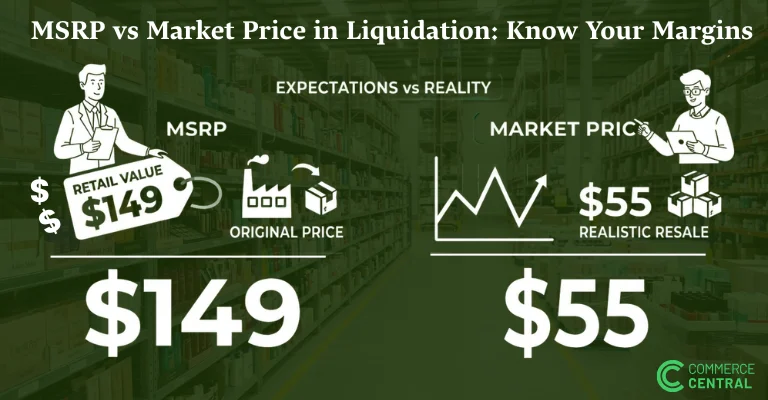
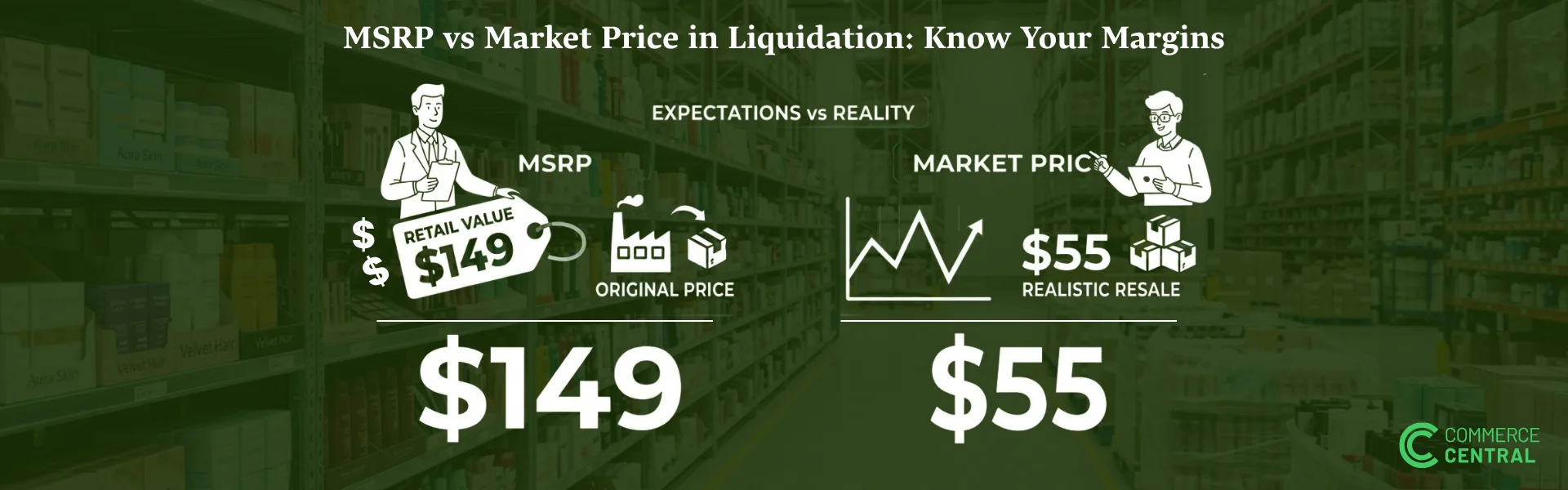
The difference between the MSRP (market sale price) and the actual market price is where your expectations are aligned with reality or where they have completely collapsed.
Having knowledge of this gap is critical not only for helping make informed decisions when purchasing items at a discount, but also for protecting your profit margins, as well as ensuring you develop an ongoing resale operation.
What MSRP Really Represents in Liquidation
The manufacturer's suggested retail price (MSRP) is how much a manufacturer first says a product should sell for in stores. The MSRP will hold a certain amount of validity regarding the way a product was marketed, branded, and perceived as valuable at that particular time period.
When liquidating product, the MSRP can be used in the following ways:
- To show consumers the total value of a pallet at retail
- To convey perceived opportunity to consumer
- To give a point of reference to consumers when comparing pricing
However, MSRP does not take into consideration how a product may sell in the secondary market; therefore it is not an accurate representation of
- The condition of the product
- The availability of that product in the marketplace
- The level of competition for the product across platforms (i.e., online and offline)
- Changes in demand after the time it was manufactured
Thus, the MSRP is useful for reference purposes only and should not be used as the sole basis for making decisions.
What Market Price Actually Tells You
The market price represents how much a product is being traded across different platforms and at any given time.
Also, unlike the MSRP, it shows what has transpired in the real market (understanding):
- How much buyers are willing to pay for a similar product today.
- The number of listings that exist for that type of product.
- How the condition of the item affects its value.
- The change in demand for that product (up or down).
In real time, the market price changes on a regular basis according to supply, competition and timing. This is why the market price will give you a more realistic perspective of what your resale potential will be.
Why the Gap Between MSRP and Market Price Exists
This disparity in value is not random, but rather a structural one.
There are several pathways that products enter liquidation channels:
- Customer Returns
- Overstock
- Packaging Damage
- Change of Seasons
Once a product is placed in this ecosystem, regardless of whether or not it has ever been used, it will have a different "value" based on its association with the secondary market; therefore, an item's resale price will typically be less than its original retail price.
In addition, online marketplaces bring more transparency to pricing; therefore, buyers are able to easily compare listings and this often results in the net price being moved closer to that of a competitive price versus the original retail price.
Where Buyers Often Go Wrong
Many buyers, especially early on, use MSRP as a shortcut to estimate profitability. This leads to several common mistakes:
Overestimating Resale Value
Assuming products will sell close to their original retail price often results in unrealistic expectations.
Ignoring Market Competition
Even high-quality products lose value when multiple sellers list the same item at lower prices.
Misjudging Inventory Quality
Without clear grading and documentation, buyers may assume higher value than the inventory actually holds.
Pallet Liquidation Sales and Realistic Pricing
In pallet liquidation sales, success depends on understanding how inventory performs after purchase, not how it is presented before it. Buyers who rely on market-based evaluation rather than retail benchmarks consistently make better sourcing decisions. This approach allows for more accurate pricing, better inventory planning, and stronger long-term margins.
How to Evaluate Market Price Before You Buy
Experienced buyers rely on a structured approach rather than assumptions.
Check Real Selling Data
Look beyond listed prices and focus on completed sales across platforms. This reveals what products are actually moving at.
Adjust for Condition
Condition plays a critical role in pricing. Items labeled as open-box or returned typically sell at a noticeable reduction compared to new products.
Consider Inventory Depth
If the same product appears in large quantities across marketplaces, pricing pressure increases. Limited supply, on the other hand, can support stronger resale value.
Account for Operational Realities
Not every item will sell at the same speed or price. Some units may require discounting, bundling, or extended storage time.
Why Clean Inventory Makes Pricing More Predictable
When inventory is well-structured and clearly documented, estimating market value becomes significantly easier.
Clean loads typically include:
- Verified product details
- Consistent condition grading
- Organized categories
This level of clarity reduces uncertainty and allows buyers to align their expectations with actual resale performance.
In contrast, loosely documented or mixed-condition pallets introduce variables that make accurate pricing difficult.
Signs That MSRP Is Being Overemphasized
Certain listing patterns suggest that retail value is being used to distract from a lack of real clarity:
- Heavy emphasis on total retail value without detailed breakdown
- Generic product descriptions with limited specificity
- Lack of condition transparency
- Absence of resale context or comparable benchmarks
When listings focus more on what products were worth rather than what they are worth now, buyers should take a closer look.
The Role of Transparency in Smarter Sourcing
As the liquidation industry evolves, transparency is becoming a key differentiator. Buyers are no longer satisfied with broad estimates they expect clarity.
Structured platforms and sourcing channels that provide:
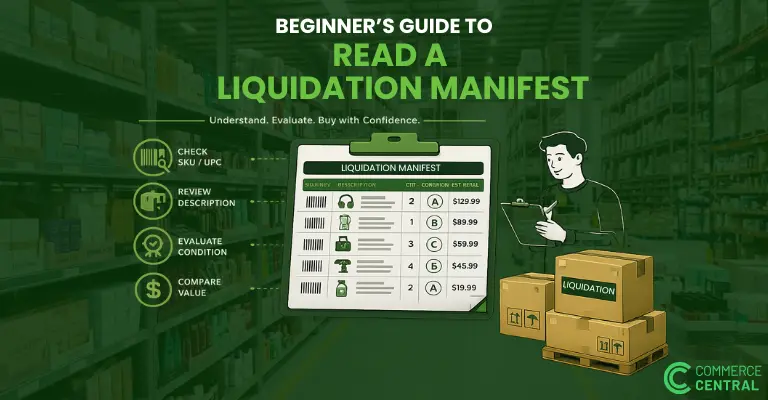
- Detailed manifests
- Accurate product information
- Clear grading standards
make it easier to evaluate inventory based on real-world resale potential rather than assumptions.
This shift is helping buyers move from speculative purchasing to data-driven sourcing.
Building a Margin-First Mindset
The most successful liquidation buyers approach sourcing with a margin-first mindset.
Instead of asking:
- What is the retail value?
They ask:
- What will this realistically sell for?
- How consistent is the inventory quality?
- How predictable is the outcome?
This shift in thinking transforms liquidation from a gamble into a scalable business model.
Value Is Defined by the Market, Not the Label
MSRP reflects intention. Market price reflects reality.
The difference between the two is where every buying decision should be evaluated. When buyers understand this gap, they stop relying on surface-level numbers and start building strategies grounded in actual resale behavior.
In liquidation, clarity creates confidence and confidence drives better margins.
FAQ
What is the difference between MSRP and market price?
MSRP is the original suggested retail price set by the manufacturer, while market price reflects what the product is currently selling for in real-world resale markets.
Why is market price lower than MSRP in liquidation?
Market price is influenced by product condition, competition, and demand, whereas MSRP represents original retail positioning and does not adjust for these factors.
How should buyers evaluate liquidation inventory value?
Buyers should analyze real selling data, adjust for condition, review inventory consistency, and consider market competition before estimating resale value.
Is MSRP useful when buying liquidation pallets?
MSRP can serve as a reference point, but it should not be used as the primary basis for evaluating profitability.
What affects resale value in liquidation the most?
Key factors include product condition, demand, competition, inventory consistency, and how accurately the inventory is documented.