Many people consider these retailers as just a simple business model to implement:
- Buy a large amount of cheap products
- Dump the products into bins
- Customers will go through bins until they find what they are looking for.
However, these retailers also don’t consider that your success relies on having a control over all aspects of inventory prior to opening. Without evaluating the inventory prior to opening, if customers Just feel that way, they will not come back.
In addition, as of 2026, being a bin retailer is no longer new. Customers now have developed an expectation of how stores operate and how they look. They have seen good bin stores vs bad bin stores and if the two differ, they can tell the difference between curated/as a treasure hunt and un-curated/as a clearance center.
Because of this fact, you will not have success based on simply opening a bin store. You will only be successful based on how you have sourced and handled inventory on day one.
The Biggest Myth: Cheap Inventory Guarantees Profit
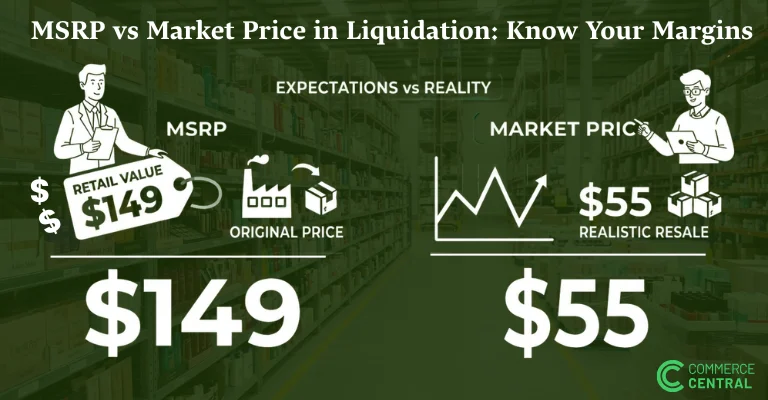
The most popular but potentially dangerous advice for liquidation is to simply "buy cheap pallets – you will make money". This advice totally disregards how retail operates. Consumers will not purchase items because they are cheap; they will purchase an item based on their perception of the item's value.
If your store is stocked up on:
- Broken electronics
- Incomplete products
- Products in a category that consumers have little need for
- Visually unattractive products
You are going to have a hard time moving any of the products out of your store...even if you price everything at $1.
If you look at the stores that have succeeded in the industry, you will see that it is not necessarily because they have purchased their inventory for the lowest price, but rather because they purchased an inventory that can be visually perceived to have high value at a glance. The initial perception of value of these items, by customers, determines foot traffic, return traffic, and a store's overall reputation.
Commerce Central recognizes this reality by focusing on visually communicating the value of the inventory well before the pallet is paid for.
What a Bin Store Really Is (And What It Isn’t)
A bin store differs from liquidation warehouse by providing customers an exciting retail environment based on unpredictability.
When shoppers enter bin store they expect to find:
- Items they can use
- Occasionally high value surprises
- Urgency associated with purchasing items before others can
If there is an excessive number of items that are not worth buying then what could once be considered a "treasure hunt" becomes nothing more than a frustrating experience. The ultimate result is that such a location will not receive repeat business long before it has an effect on prices.
The same mistake is made by most store owners when they misjudge what the random factor is supposed to be. While many store owners think of creating randomness, in reality it is controlled randomness.
Commerce Central provides assistance to buyers to improve their ability to determine the overall distribution of the items in their inventory so as much of the randomness in bins still meets their customers expectations.
Step 1: Choose Inventory That Drives Repeat Footfall
The real success metric for a bin store isn’t daily revenue.
It’s repeat customers.
And repeat customers come back for one reason: they believe there’s always something worth finding.
That belief is built through consistent inventory patterns:
- Recognizable product categories
- Functional items
- Occasional branded products
- Items with clear utility
If every visit feels like a gamble with low payoff, customers stop showing up.
Many beginners start by asking, where can i buy pallets, focusing only on access. But access is not the advantage anymore. Everyone has access.
The advantage is knowing what kind of inventory creates behavior browsing, excitement, urgency, and repeat visits.
Commerce Central helps shift this mindset by focusing on inventory visibility, enabling buyers to align sourcing decisions with customer expectations.
Step 2: Pricing Strategy Only Works If Inventory Supports It
Bin stores rely heavily on psychological pricing cycles:
- High price on restock day
- Gradual markdown
- Clearance at the end
This model depends entirely on Day 1 perception.
If customers walk in on restock day and don’t see value, they won’t return later in the week. That breaks the entire pricing cycle.
Inventory quality determines:
- How quickly items move
- Whether customers return
- Whether markdowns feel like deals or desperation
Many store owners try to fix poor inventory with aggressive pricing. That approach only accelerates losses.
Commerce Central’s transparency-first approach ensures buyers can evaluate inventory quality before purchase so pricing strategies are supported, not strained.
Step 3: Avoid the Inventory Trap That Kills Most Stores
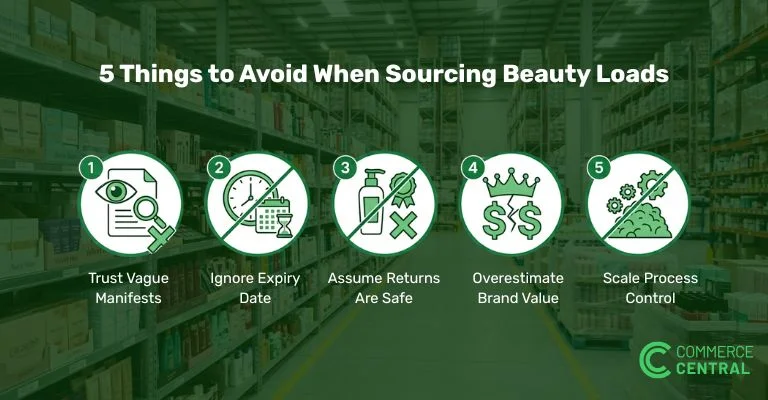
The fastest way to destroy a bin store is by filling it with what operators call “filler inventory.”
This comes from:
- Poorly graded returns
- Overhyped manifests
- Inconsistent suppliers
- Misleading retail value claims
At first, it seems manageable. But over time, it creates:
- Slower sell-through
- Negative customer perception
- Increased unsellable stock
- Operational fatigue
Once customers associate your store with low-quality finds, rebuilding that perception becomes extremely difficult.
Commerce Central reduces this risk by focusing on transparency and realistic inventory representation helping buyers avoid loads that damage long-term store performance.
Step 4: Build a Sourcing System, Not a Sourcing Habit
Most beginners treat sourcing like a hunt.
They jump between suppliers looking for “better deals,” assuming they can outsmart the system.
What this actually creates is inconsistency:
- One week: good inventory
- Next week: poor inventory
- Customers lose trust
Successful operators don’t chase deals. They build systems.
A strong sourcing system means:
- Predictable inventory quality
- Reliable supplier relationships
- Consistent customer experience
- Easier operational planning
Choosing the best liquidation website is not about finding the lowest price. It’s about finding a platform that supports repeatable, transparent sourcing.
Commerce Central is designed around this principle helping buyers move from opportunistic buying to structured procurement.
Step 5: Operational Discipline Determines Profitability
Even with good inventory, poor operations can destroy margins.
Every pallet requires:
- Sorting
- Categorization
- Removal of unsellable items
- Strategic bin placement
Without a defined system, inventory piles up faster than it sells.
This creates:
- Overstock
- Disorganization
- Missed selling windows
- Increased labor cost
Many stores fail not because they couldn’t sell but because they couldn’t manage.
Commerce Central supports operational efficiency by reducing uncertainty in incoming inventory, allowing businesses to plan workflows instead of reacting to surprises.
Step 6: Design the Store Around Experience
The most successful bin stores don’t look like liquidation outlets.
They look intentional.
That includes:
- Clean layouts
- Organized bins
- Clear pricing signage
- Regular restocking schedules
Customers should feel like:
“Something good might be here today.”
That feeling drives behavior far more than pricing alone.
And that feeling starts with inventory quality not marketing.
Step 7: Control Loss Before You Scale
Every bin store has loss.
The difference is whether it’s controlled.
Uncontrolled loss comes from:
- Poor inventory selection
- Lack of sorting discipline
- Holding unsellable items too long
Controlled loss comes from:
- Early removal of bad stock
- Efficient clearance strategies
- Continuous sourcing refinement
Scaling without loss control doesn’t increase profit it increases exposure.
Commerce Central helps reduce initial risk by ensuring buyers start with clearer, more predictable inventory.
The Hard Truth About Bin Stores in 2026
Bin stores are no longer an easy win.
The model has matured. Customers are smarter. Competition is stronger.
What worked in 2020 random pallets and aggressive pricing no longer works consistently.
Now, success depends on:
- Inventory discipline
- Sourcing clarity
- Operational structure
- Customer experience design
Most stores fail not because the model is broken but because their execution is.
Final Takeaway
A bin store is not about selling cheap products.
It’s about delivering consistent value in an unpredictable format.
If your sourcing is random, your results will be random.
If your sourcing is structured, your store can scale.
Commerce Central exists to support that structure by making inventory clearer before it becomes a problem.
Because in 2026, the winners won’t be the ones buying cheapest.
They’ll be the ones buying smartest.
FAQ
What is a bin store business model?
A retail format where liquidation inventory is sold in bins at decreasing price points to drive volume sales.
Where can I buy pallets for a bin store?
Buyers should focus on platforms that offer transparency, consistency, and reliable inventory quality.
What inventory works best for bin stores?
High-utility items like home goods, tools, electronics accessories, and small appliances.
How do bin stores stay profitable?
By controlling sourcing quality, managing operations efficiently, and maintaining customer experience.
Is starting a bin store profitable in 2026?
Yes, but only with disciplined sourcing, structured operations, and consistent inventory quality.