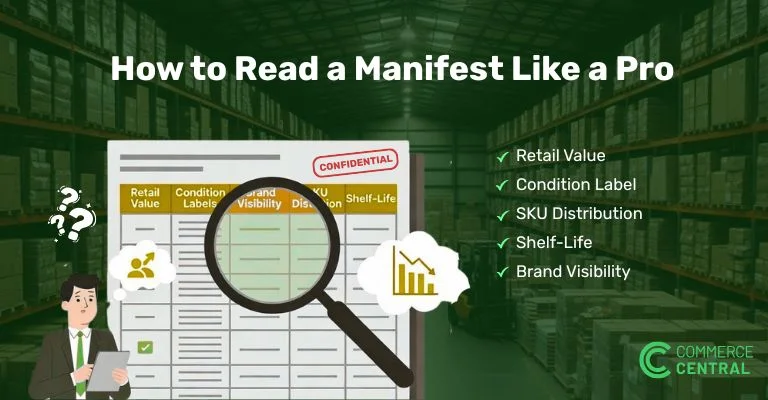
How to Read a Manifest Like a Pro (Before You Wire Money)
Learn how to read a liquidation manifest like a professional buyer. Spot red flags, avoid overpaying, and reduce risk before purchasing pallet inventory.
Feb 27, 2026Read Article

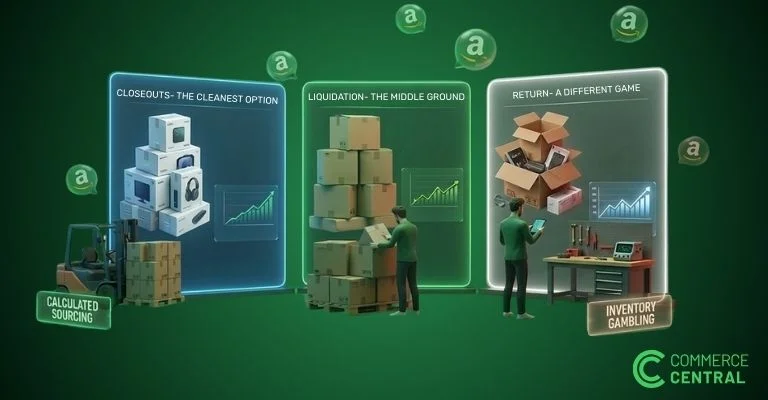
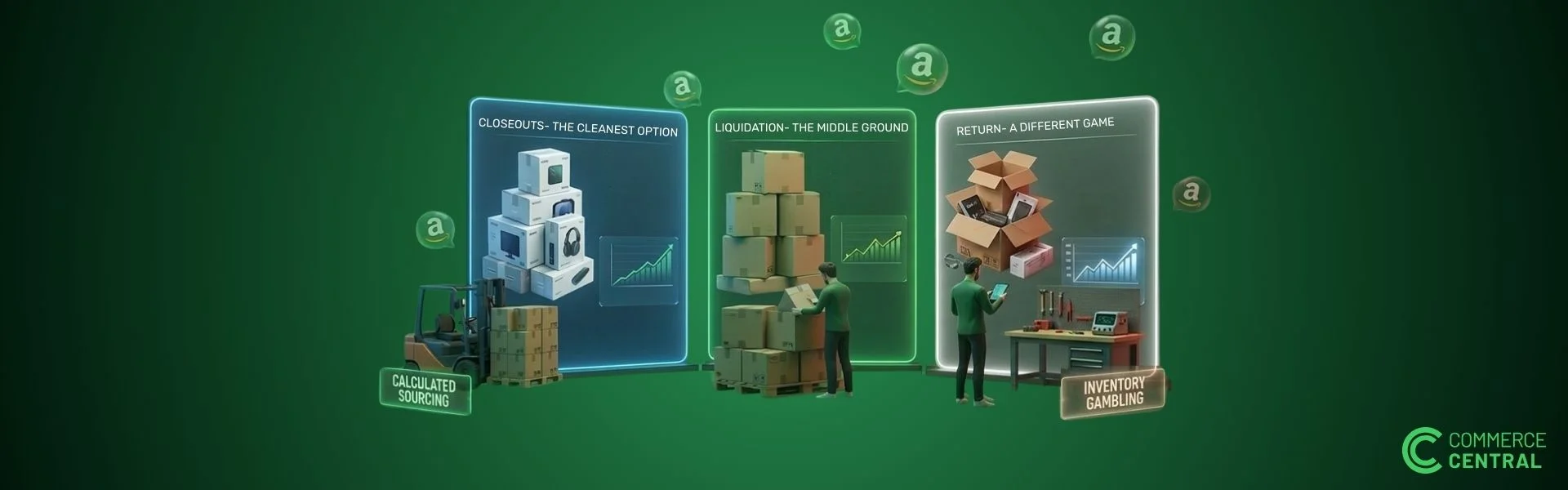
Liquidation inventory is not the same; there are at least three distinct types of liquidation inventory: closeout merchandise, general liquidation merchandise, and customer return merchandise.
Each of these categories carries a different level of risk, different levels of resale potential, and different operational headaches to deal with. However, resellers often treat them the same during the buying process by bidding on them in a liquidation auction environment with limited information and a lot of urgency. The lack of understanding can lead to unsellable inventory, compliance issues, and margins disappearing faster than predicted.
Commerce Central understands that intelligent procurement starts with understanding what type of liquidation inventory you are actually purchasing, therefore providing smarter sourcing analysis than currently available options in the liquidation sector and are committed to educating their customers about the differences between closeouts, standard liquidations, and returns.
Regrettably, to date there has not been any real solution within the liquidation industry to this inventory description problem.
Nearly every type of surplus inventory has been categorized as liquidation, yet due to the differences in these categories from one another, determining whether a reseller will achieve a profit or take a loss greatly depends on whether the reseller has sufficient knowledge regarding the various types of liquidation inventory categories.
Most platforms in the liquidation sector use simple terms in their descriptions because simplicity encourages increased bidding. The less buyers understand the differences in inventory categories, the more likely they are to place speculative bids.
Commerce Central has taken a different route in encouraging clarity around inventory categories through their educational methods which align a buyer's sourcing strategy to their resale strategy. The distinction of the various categories from each other is the difference between calculated sourcing and inventory gambling.
A majority of resellers tend to misunderstand closeouts, and in fact, it is very likely closeouts will be the most valuable product category available for resale at this time.
Retailers will typically place all closeout inventory when they discontinue certain products, change the packaging style of certain products, or create space for a seasonal sale. All of the closeouts will be inventory that is generally new and unused, in its original packaging.
Amazon resellers will appreciate the fact that the consistency of condition is going to significantly decrease the amount of operational friction involved with these types of closeouts.
Closeouts typically can provide a reseller with:
Since closeouts are generally sold as wholesale; therefore, they can concentrate on developing pricing strategy as opposed to repairing or refurbishing closeout products.
Commerce Central wants to provide clarity regarding the source of the closeout inventory, since closeout inventory will allow the buyer to have better confidence in estimating the resale worth of any closeout inventory.
General liquidation inventory sits somewhere between clean closeouts and unpredictable returns.
Retailers liquidate products for many reasons: overstock, seasonal resets, category changes, or warehouse consolidation. The condition range can vary widely depending on the retailer’s policies and handling processes.
For resellers, this category requires deeper evaluation.
Possible characteristics include:
When sellers encounter liquidation inventory inside a liquidation auction environment, the biggest challenge is separating real value from inflated expectations.
Commerce Central prioritizes transparency in listings so buyers can evaluate inventory with realistic assumptions instead of relying on broad condition labels that hide operational complexity.
Returning customer inventory can create a very different risk profile than closeout or regular liquidation types of stock. Return liquidation stock is comprised of items that have already been purchased and returned to the seller by customers. Therefore, there are many reasons why a product could have been returned; some return scenarios are benign, while others could be catastrophic.
Some examples of common scenarios of returns are:
For experienced resellers, returned inventory provides the opportunity to create value as long as they have set reasonable expectations for resaleable condition. The most common mistake first time buyers make is assuming the returned inventory will be in "like new" condition. The reality of multiple levels of condition complicates preparation for resale far more than it would for other types of liquidation stocks.
Commerce Central recognizes that returned merchandise (returns) will take a considerably higher level of inspection and operational capacity than other liquidation categories, making it critical to have high visibility into and transparency of the condition of the returned stock.
The confusion between returns and closeouts can lead to problems when sourcing goods. Closeout inventory consists of goods that have never sold to the final customer.
Return liquidation consists of goods that have already gone through the customer experience.
The difference in the types of goods creates varying workflows, meaning; typical closeouts will have predictable conditions and easier workflows for listing. Returns will typically require testing, repackaging and/or parts replacement before they can be resold.
The operational differences can greatly impact return rates, account health, and profit margin for Amazon sellers, who must adhere to strict performance metrics.
Commerce Central reinforces the concept of ‘Inventory Transparency’ so sellers can see how to work with both types of merchandise before committing any capital.
Most people assume that bulk liquidation inventory will sell the same way as closeouts when they go up for sale online. However, people tend to act differently when shopping at Amazon than at a discount retail store, and therefore, a purchaser's decision to buy from either store depends heavily on packaging, completeness, and perceived product condition.
Since most closeout merchandise is left in a retail pattern, closeout merchandise tends to inspire more feelings of confidence in a purchaser than bulk liquidation loads. Both will sell, but the bulk liquidity load requires a little more aggressive pricing and a clearer sense of condition to help the purchaser know what to expect.
Commerce Central's focus is on ensuring that all inventory is accurately represented so that the reseller has a basis to accurately price their product according to the true condition of the inventory they are selling.
As listings cycle fast and bidding activities increase, sellers tend to focus on the upside potential rather than on their operational risk.
They envision the best-case scenario.
- Perfect margin to resell.
- Fully functional products.
- All listing approvals will be easy.
The reality, however, is usually much more complicated.
Commerce Central encourages a sourcing mindset within an emphasis on verification versus excitement. The focus of decision making for a buyer when sourcing an inventory category should be strategy instead of speculation.
The process of evaluating inventory by experienced resellers is organized using five categories:
Commerce Central's transparent process allows for inventory origin and condition to be much more understandable to buyers. By being clear about what they are purchasing, this allows them to make purchasing decisions that help them scale and prevents them from having to make a purchasing decision they regret later.
Ambiguity is the underlying motivation for the liquidation industry to operate successfully.
Confusion regarding closeouts, liquidation inventory and returns enable sellers to inflate their perceived value & overestimate their value.
Individuals purchasing from resale outlets desiring ongoing financial success must do away with uncertainty in regard to the type of inventory that is actually being purchased.
Knowing what it is you are paying for, therefore, is not optional; it is mandatory.
And if liquidation is to be a reliable source of strategic procurement, then the one element that will provide transparency and assurance to both parties is ...
We ask ourselves the question, "What type of merchandise is being purchased?" and this will determine whether the transaction was a bargain or a bad deal.
What is the difference between closeouts and liquidation inventory?
Closeouts typically involve unsold retail stock that remains new and unused, while liquidation inventory can include mixed-condition products from overstock or warehouse resets.
Is return liquidation profitable for resellers?
It can be, but it often requires more inspection, repair, and testing compared to other inventory categories.
Why do many liquidation listings lack clarity?
Some marketplaces simplify descriptions to encourage faster bidding activity, which can obscure the true condition of the inventory.
Which type of inventory is easiest for Amazon sellers?
Closeout inventory generally requires less preparation and carries lower risk than returned merchandise.
How can buyers avoid liquidation sourcing mistakes?
By understanding the inventory category, verifying condition expectations, and choosing sourcing channels that prioritize transparency.
Learn how to read a liquidation manifest like a professional buyer. Spot red flags, avoid overpaying, and reduce risk before purchasing pallet inventory.
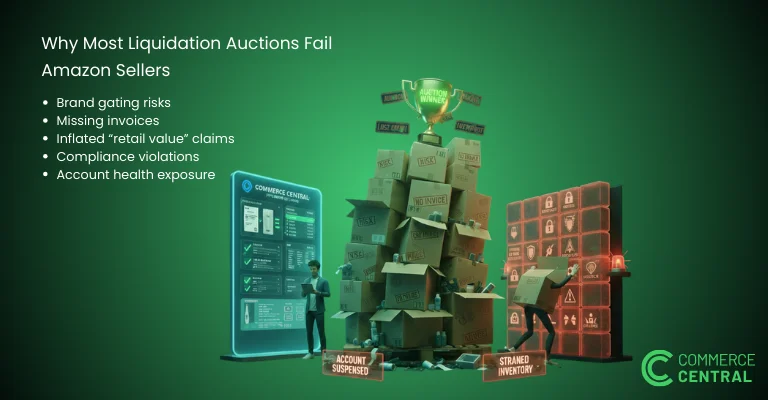
Learn why most liquidation auctions fail Amazon sellers, the compliance and documentation risks involved, and how transparent sourcing alternatives reduce costly mistakes.
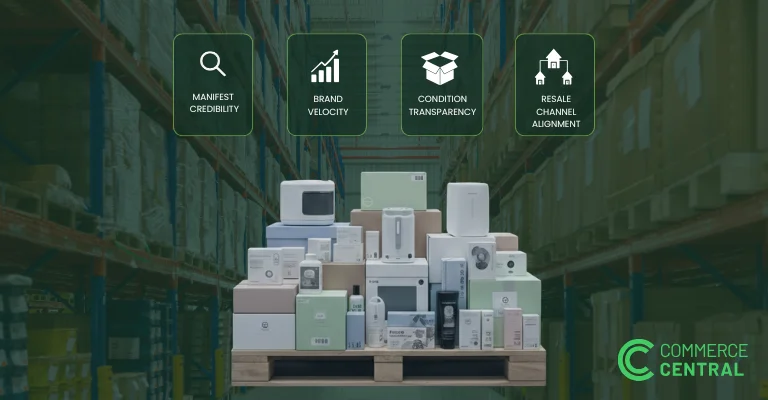
Stop guessing when buying liquidation pallets. Learn how professional buyers evaluate manifests, brand demand, and resale channels to avoid costly mistakes.
Join the only private surplus distribution platform built for trusted Buyers and Sellers.


