Pallet flipping isn’t really about discovering a fortune.
It's about cutting down on the chance of loss through being able to make better choices.
A lot of people who start in the liquidation, or reCommerce business, think profit is only about the price they pay. They look for the cheapest pallets they can, use exaggerated numbers for what the items originally sold for in store, and hope resale demand will fill the gap. While that can work sometimes, it won’t reliably allow you to build up a business.
Professional buyers don’t expect pallets to be profitable; they check them using information.
Commerce Central is based on that checking process. Rather than letting buyers wonder what they’ll get, the site sets up listings so choices about buying pallets are made using what’s known, not what someone thinks could happen.
If you want to be sure when you purchase pallets, you require a system – and below are the ones that people who are truly committed to the business use.
The 4-Part Evaluation Framework
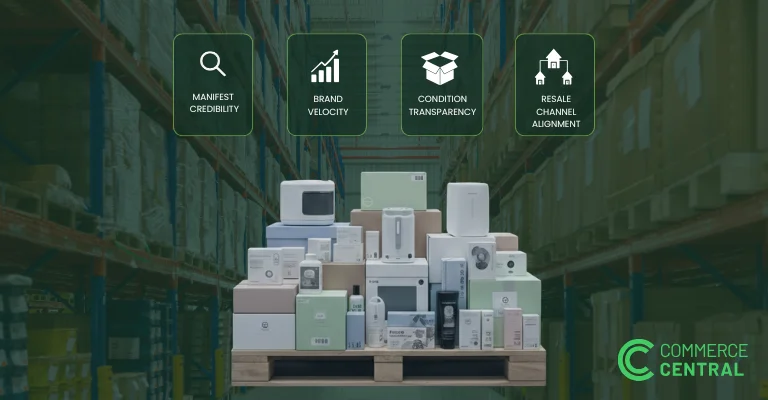
Before committing capital to liquidation pallets, run through four critical filters:
- Manifest credibility
- Brand velocity
- Condition transparency
- Resale channel alignment
If evaluation fails even one of the four, margins shrink. If it fails multiple, the flip becomes unpredictable.
Commerce Central structures listings so buyers can apply this framework consistently because sustainable flipping requires standards.
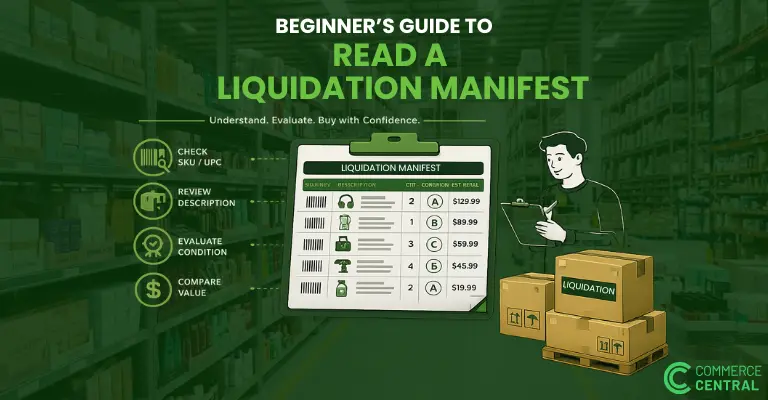
1. Manifest Credibility: Does the Listing Hold Up?
The manifest is the basis for any pallet you buy; without it being easy to understand, everything else is a matter of dealing with problems as they come up.
When you’re checking out liquidation pallets, be sure to find:
- Particular types of products – not just broad collections;
- Precise counts of what’s in there;
- Realistic prices that stores do sell the goods for;
- When it matters, how long the goods will stay good; and
- Notes about the packaging that show what it’s like to sell it on.
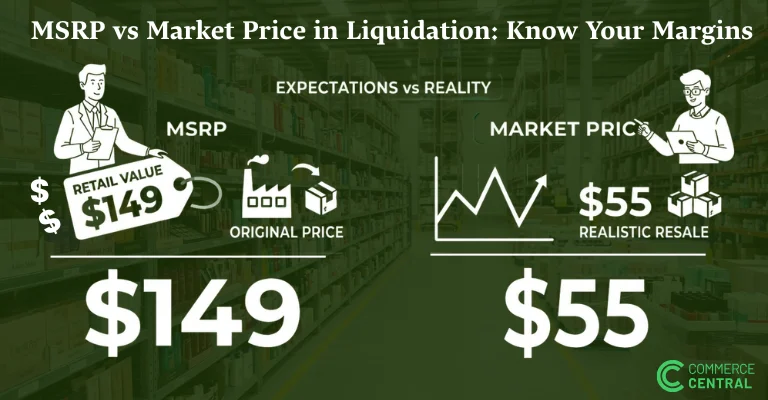
Lots of sites use really high ‘Manufacturer’s Suggested Retail Price’ totals to make it seem as though there’s a good profit, but high numbers don’t mean the goods can be sold. People who buy have to work out what they’re likely to sell at the prices goods are actually at now.
Commerce Central doesn’t use over-the-top retail prices, and instead gives information people can use. By making real ‘best before’ dates, brand and packaging details available at the start, buyers can judge if they can make a profit before they bid or buy.
If you can’t simply see what you are buying, you can’t then put a good price on it with confidence.
2. Brand Velocity: Will It Actually Move?
A pallet’s worth isn’t set by how much is in it – it’s set by how fast those things turn into money.
How well people know a brand has a direct effect on how fast it sells.
When you’re looking at liquidation pallets, you should ask:
- Do customers trust these brands?
- Are they brands you can’t easily sell on big resale sites?
- Are they already too common in discount channels?
- Do they need a lot of price cuts to sell?
Commerce Central makes sure brands are clear, because how well a brand is known has a direct effect on how well things will sell again. Buyers can get loads that suit the places they sell, instead of finding out too late that things are hard to list or can’t be sold at all.
Brands people don’t know cause trouble. Brands you can’t sell cause delays. Brands everyone has cause price falls.
Good sales need you to think about brands.
3. Condition Transparency: What Does “Return” Really Mean?
What “return pallets for sale” actually means can be very different, based on who is selling.
Returns can be:
- Items that were opened, but never used
- Things with packaging that’s been damaged – but not the item
- Products with parts missing
- Goods which don’t work properly
Without knowing the condition, people buying are guessing at how much work to get ready for sale will be, how long testing will take, and how likely refunds are.
Commerce Central deals with this by making sure to be clear about what to expect with the packaging, and what state the stock is in. Buyers aren’t required to work out what unclear condition notes mean – they get details which help them work out how much work they’re going to have.
Being clear about condition has a direct effect on work costs, how you plan storage, and how pleased customers will be.
If “as is” is all you’re told, you should expect to take on risk that isn’t shown.
4. Resale Channel Fit: Where Will This Inventory Win?
One of the things people most often don’t think about with buying liquidated pallets to resell, is what kind of resale it will work for.
Not every pallet is right for every place to sell.
You need to ask:
- Will this stock be okay for Amazon FBA?
- Is it better for eBay?
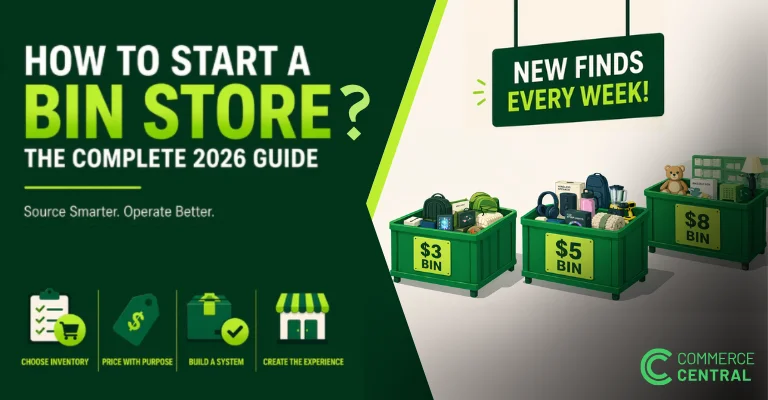
- Would it be good for a ‘bin store’?
- Is it strong for selling locally?
Commerce Central’s listings help buyers assess whether it’s suitable, by giving details that matter for the business, right away. With stock information shown clearly, buyers can decide where it will fit, before they use any money.
Stock that isn’t right for the selling place doesn’t just lower profit – it makes things take longer to sell.
And slow sales kills progress.
Where to Buy Pallets That Actually Flip
Lots of buyers look for the cheapest possible place to start. But a cheap starting cost doesn’t mean things will sell quickly.
If you really want to resell, the thing to ask is:
Where can I get pallets with information I can rely on?
The best liquidation website isn’t the one which advertises the biggest possible profit. It’s the one which cuts down on surprises.
Commerce Central is built around getting clear information first. Listings are made to help people decide, not to push them. Rather than selling by creating a sense of urgency, the site puts matching expectations first.
That difference decides whether reselling is something you can do again and again – or if it’s going to be unpredictable.
Spotting Red Flags in Liquidation Pallets and Return Pallets for Sale
Buyers who know what they’re doing spot trouble signs pretty fast.
Look out for:
- Retail prices that seem too high, and don’t say anything about what they’d sell for
- No date given for when products will expire, if they can expire
- Lots of disclaimers
- No list of the brands included
- No detail on how the packaging looks
- “Uninspected” and nothing more.
These things mean there’s information missing.
Commerce Central’s way of doing things meets those problems with openness – giving you what you need to know before you buy. When the facts about the goods handle problems further down the line, buyers don’t have as much trouble, and they feel more certain about being able to resell.
Vagueness isn’t a chance to get a good deal; it’s a danger.
Why Many Buyers Struggle When They Buy Pallets
People new to this often let their feelings get in the way when they buy. They go after promises of making three times their money back, or think that goods listed vaguely are actually worth a lot.
Actually, doing well at this, over and over, comes from:
- Clear lists of what’s in the pallet
- Brands people know
- Prep work that is what you’d expect
- Prices that make sense for resale
Commerce Central helps buyers be careful when they find goods, by making openness a part of buying. Rather than encouraging quick, thoughtless bids, the service pushes careful looking at the goods.
That change turns flipping into a plan, not a gamble.
Wholesale Scale Requires Even More Discipline
When you buy pallets in large amounts at wholesale, little errors add up very quickly.
Buying at wholesale liquidation doesn’t let you get away with not checking things out. Just one thing that isn’t clear can become thousands of dollars in goods that don’t sell quickly.
Commerce Central’s open approach is even more important when you’re buying a lot. Buyers need to be told the same things about every load, so they can create ways of finding goods that work every time.
Growing your business needs things to be predictable.
Predictability needs openness.
Cheap Is Easy. Profitable Is Intentional.
Pallets that are cheap are all over the place.
Pallets that make money need care, checking, and openness in sourcing.
When buyers use a careful list, and get goods from services that value openness, flipping can be done again and again.
Commerce Central’s promise to publish real dates for when things expire, the brands, and how the packaging looks, lets buyers make choices based on facts – not hope.
Flipping Is a System
If you want to be sure when you buy pallets, make rules.
If you want liquidation pallets that will sell, ask for clarity.
If you want to avoid being sorry when you get return pallets to sell, get rid of vagueness before you buy.
Commerce Central positions transparency as infrastructure because flipping only works when buyers understand what they’re buying.
Confidence comes from clarity.
Clarity comes before checkout.
FAQ
How do I know if a pallet is worth flipping?
Evaluate manifest accuracy, brand visibility, condition transparency, and resale channel alignment before purchasing.
Where can I buy pallets that actually flip?
Look for platforms that prioritize transparency and publish real inventory details instead of relying on inflated retail values.
Are return pallets for sale profitable?
Yes, when condition clarity and resale planning are addressed upfront.
What is the biggest red flag in liquidation pallets?
Vague manifests combined with inflated MSRP and unclear condition labels.
What makes the best liquidation website?
Consistent transparency, operational clarity, and alignment between listing details and delivered inventory.